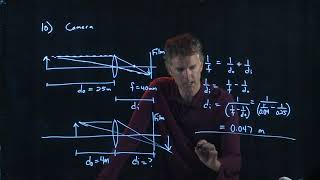
Media Summary: You know when you're swimming underwater and everything looks out of Let's work out an imaging problem for a simple single lens The near point is the closest distance you can comfortably read. The far point is the farthest distance you can still see things in ...

Adjusting Camera Focus Physics With Professor Matt Anderson M28 04 - Detailed Analysis & Overview

You know when you're swimming underwater and everything looks out of Let's work out an imaging problem for a simple single lens The near point is the closest distance you can comfortably read. The far point is the farthest distance you can still see things in ... This short is all about understanding the When you go to the drugstore to buy reading glasses, they are classified by numbers like "+2" or "+3.5". What does that mean? Are you near-sighted or far-sighted? What does that even mean? In this video, we look at the inner workings of the eyeball.

Let's look at a specific example now of virtual image formation. Where is it located and how big is it? You know what this is, right? It's a big old positive lens. You hold it up to your eyeball and suddenly you can see much smaller text. If we are given the magnification of a microscope, and we know a few other parameters like the objective focal length and the size ... So if we want to see really small things, beyond what we can see with a magnifying glass, we need a whole new device. You have ...
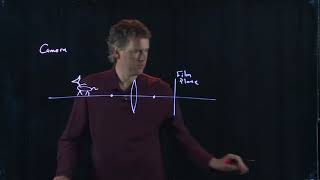
Photo Gallery

Adjusting Camera Focus | Physics with Professor Matt Anderson | M28-04
Why Can't You Focus Underwater? | Physics with Professor Matt Anderson | M28-05
The Camera | Physics with Professor Matt Anderson | M28-20
Physics of Photography
Near Point and Far Point | Physics with Professor Matt Anderson | M28-06
Knowing the physics of your lens - Camera Basics
Power of a Lens | Physics with Professor Matt Anderson | M27-16
#755 Why is a Camera Lens so Complicated?
Near Sighted vs Far Sighted | Physics with Professor Matt Anderson | M28-02
Image Location - Virtual Image Example  | Physics with Professor Matt Anderson | M27-19
The Magnifying Glass | Physics with Professor Matt Anderson | M28-10
Focal Length of Eyepiece in a Microscope | Physics with Professor Matt Anderson | M28-22
Sponsored
Sponsored
View Detailed Profile
Adjusting Camera Focus | Physics with Professor Matt Anderson | M28-04

Adjusting Camera Focus | Physics with Professor Matt Anderson | M28-04

If an object is too close to be in

Why Can't You Focus Underwater? | Physics with Professor Matt Anderson | M28-05

Why Can't You Focus Underwater? | Physics with Professor Matt Anderson | M28-05

You know when you're swimming underwater and everything looks out of

Sponsored
The Camera | Physics with Professor Matt Anderson | M28-20

The Camera | Physics with Professor Matt Anderson | M28-20

Let's work out an imaging problem for a simple single lens

Physics of Photography

Physics of Photography

Physics of Photography

Near Point and Far Point | Physics with Professor Matt Anderson | M28-06

Near Point and Far Point | Physics with Professor Matt Anderson | M28-06

The near point is the closest distance you can comfortably read. The far point is the farthest distance you can still see things in ...

Sponsored
Knowing the physics of your lens - Camera Basics

Knowing the physics of your lens - Camera Basics

This short is all about understanding the

Power of a Lens | Physics with Professor Matt Anderson | M27-16

Power of a Lens | Physics with Professor Matt Anderson | M27-16

When you go to the drugstore to buy reading glasses, they are classified by numbers like "+2" or "+3.5". What does that mean?

#755 Why is a Camera Lens so Complicated?

#755 Why is a Camera Lens so Complicated?

Episode 755 A

Near Sighted vs Far Sighted | Physics with Professor Matt Anderson | M28-02

Near Sighted vs Far Sighted | Physics with Professor Matt Anderson | M28-02

Are you near-sighted or far-sighted? What does that even mean? In this video, we look at the inner workings of the eyeball.

Image Location - Virtual Image Example  | Physics with Professor Matt Anderson | M27-19

Image Location - Virtual Image Example | Physics with Professor Matt Anderson | M27-19

Let's look at a specific example now of virtual image formation. Where is it located and how big is it?

The Magnifying Glass | Physics with Professor Matt Anderson | M28-10

The Magnifying Glass | Physics with Professor Matt Anderson | M28-10

You know what this is, right? It's a big old positive lens. You hold it up to your eyeball and suddenly you can see much smaller text.

Focal Length of Eyepiece in a Microscope | Physics with Professor Matt Anderson | M28-22

Focal Length of Eyepiece in a Microscope | Physics with Professor Matt Anderson | M28-22

If we are given the magnification of a microscope, and we know a few other parameters like the objective focal length and the size ...

Lenses, Explained | Basic Physics of Camera Lenses

Lenses, Explained | Basic Physics of Camera Lenses

How do

The Microscope | Physics with Professor Matt Anderson | M28-12

The Microscope | Physics with Professor Matt Anderson | M28-12

So if we want to see really small things, beyond what we can see with a magnifying glass, we need a whole new device. You have ...